
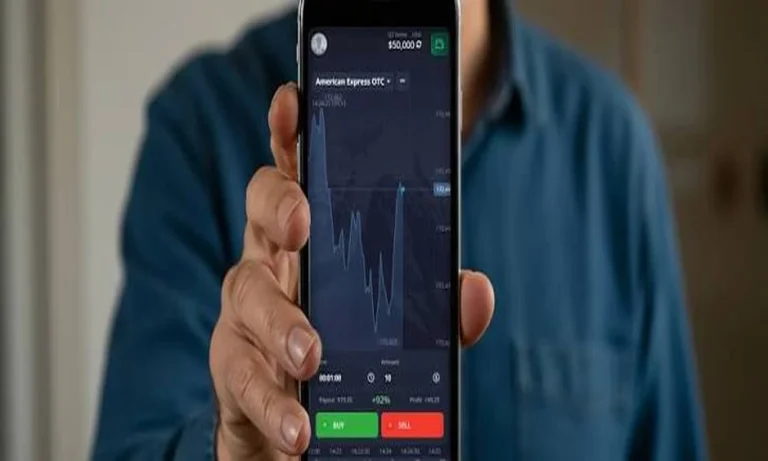
A Day Trading App is designed to help market participants monitor prices, place orders and manage short-term positions within the trading session. Since intraday activity can involve rapid price changes, the quality of execution, market information and risk controls can matter more than visual design alone.
Day trading is fundamentally different from long-term investing. Positions may be opened and closed within the same session, and traders often rely on liquidity, price behaviour and predefined risk levels rather than a long-term business thesis.
Because short-term trading can lead to significant losses, users should evaluate both the platform and their trading process carefully before committing capital.
Start With Fast and Clear Order Placement
Active traders benefit from an order screen that is simple to navigate and quick to use. Before submitting an order, they should be able to review essential details such as the security name, quantity, price, order type, available funds, product type and applicable charges. Although fast execution matters, accuracy should remain a priority. Checking the order details before confirmation can help prevent unintended positions caused by incorrect quantities or prices, especially during volatile market conditions.
Understand the Available Order Types
Market and limit orders serve different purposes. A market order generally aims to execute at the best available market price, while a limit order lets traders specify the price at which they are willing to buy or sell. Market orders may suit situations where immediate execution is important and sufficient liquidity is available. Limit orders offer greater price control, although execution is not guaranteed if the market does not reach the specified price.
Check Market Depth
Market depth displays available buy and sell orders at different price levels. It helps traders assess short-term liquidity and understand the number of orders near the current market price. However, order-book information can change rapidly as participants modify or cancel orders. Therefore, market depth is best used to evaluate execution conditions rather than predict future price movements.
Review Charting Tools
Charting tools help active traders analyse historical prices and trading volumes across different periods. Useful features include multiple timeframes, volume data, moving averages, momentum indicators, drawing tools, and support and resistance levels. Using too many indicators can create conflicting signals and complicate decisions. A smaller set of familiar tools may help traders interpret market conditions more consistently.
Look at Liquidity Before Entering
Liquidity plays an important role in day trading because positions may need to be closed quickly. Securities with active participation and narrower bid-ask spreads generally offer better execution conditions. In contrast, low liquidity and wider spreads can increase trading costs and make it difficult to exit at the expected price. Before entering a position, traders should review trading volume, bid-ask spreads, market depth and recent order activity.
Put Broader Market Movement In Context
Around the middle of the trading process, users may follow the Etf Market to understand how broader indices, sectors or diversified market products are behaving during the session.
This can provide useful context for individual price moves without replacing security-specific analysis.
Broader Direction Does Not Guarantee Individual Movement
A stock can fall even when the overall market rises.
Similarly, a stock can rise during a weak market because of company-specific news or sector developments.
Traders should therefore combine market context with instrument-level analysis.
Define Risk Before Entering
Risk management should be established before a position is opened.
A trader can define:
- Entry level
- Maximum acceptable loss
- Exit condition
- Position size
- Expected holding period
Position Size Should Match Volatility
Highly volatile securities can move sharply within a short period.
Using a large position in such an instrument can create substantial losses quickly.
Position sizing should reflect both volatility and the trader’s available capital.
Watch For Slippage
Slippage occurs when an order executes at a different price from the one the trader expected.
This can happen during:
- High volatility
- Low liquidity
- Rapid price movement
- Large orders
Small Differences Can Matter In Frequent Trading
For a trader placing many orders, repeated slippage can affect overall results.
Execution quality should therefore be reviewed alongside brokerage and other transaction costs.
Compare The Complete Cost Structure
Active trading can generate multiple charges over time.
- Brokerage
- Exchange-related charges
- Taxes
- Statutory levies
- Other applicable fees
Low Brokerage Does Not Mean Low Total Cost
Even when brokerage is low, frequent transactions can still generate meaningful expenses.
Traders should evaluate their results after all charges rather than focusing only on gross profits.
Use Alerts With A Clear Purpose
Price alerts can help traders monitor specific conditions without watching every security continuously.
Useful alerts may include:
- Price levels
- Volume changes
- Index movement
- Corporate announcements
Avoid Excessive Notifications
Too many alerts can encourage unnecessary trading.
Notifications should support a predefined strategy rather than create pressure to act on every market move.
Keep A Trading Journal
A journal can help traders understand whether they are following a repeatable process.
Useful records include:
- Entry reason
- Entry price
- Exit price
- Position size
- Market context
- Result
- Mistakes
Review The Decision Process
A profitable transaction does not always mean the decision was good.
Likewise, a properly planned trade can still lose because markets are uncertain.
Reviewing multiple trades can help identify recurring strengths and weaknesses.
Control Emotional Reactions
Day trading can create strong emotional pressure because prices and profit-and-loss figures change continuously.
Common mistakes include:
- Chasing a rapidly moving price
- Increasing exposure after a loss
- Refusing to close an invalid setup
- Trading without a plan
Use Predefined Rules
Risk limits and exit conditions are most useful when decided before the trade.
Changing them emotionally after the market moves against a position can create larger losses.
Separate Trading From Long-Term Investing
Intraday positions and long-term financial planning usually serve different purposes.
A trader may focus on price movement and execution, while a long-term investor may focus on business fundamentals, asset allocation and financial goals.
Do Not Let A Short-Term Position Become A Long-Term Holding
One common mistake is holding an unsuccessful intraday position for longer simply to avoid recognising a loss.
A trading position should be managed according to the original plan.
Keep Long-Term Contributions Separate
Investors may also use a Sip Mutual Fund App for recurring long-term contributions, but systematic investing follows a very different framework from intraday activity.
These decisions should be evaluated separately because their objectives, risk profiles and time horizons differ.
Conclusion
A Day Trading App should support fast execution, clear order placement, reliable market data and effective position monitoring.
Traders should also evaluate liquidity, charting tools, charges, security and risk controls before selecting a platform.
The application itself cannot make day trading low-risk. Short-term market activity requires disciplined position sizing, predefined exits and consistent risk management.
A well-designed platform can make execution easier, but the quality of the trading process remains the most important factor.
FAQs1. What Is A Day Trading Platform Used For?
It allows traders to monitor markets, place short-term orders and manage positions during the trading session.
2. Why Is Liquidity Important For Intraday Trading?
High liquidity can support more efficient entry and exit and may reduce bid-ask spreads.
3. What Is Slippage?
Slippage is the difference between the expected execution price and the actual price received.
4. Are Technical Indicators Guaranteed Trading Signals?
No, they analyse historical market data and cannot guarantee future price direction.
5. Why Should Day Traders Define Position Size?
Position sizing helps limit the amount of capital exposed to any single trade.
6. Can Day Trading Produce Large Losses?
Yes, rapid price movement, leverage and frequent activity can result in significant losses.