

Category

Trading

Category

Global financial markets operate across different time zones, creating opportunities for traders in the United Arab Emirates to access currencies, commodities, indices, and other financial instruments throughout the day. However, being able to trade around the clock does not mean every hour offers equal potential. Market liquidity, volatility, trading costs, and the availability of economic information change as different financial centres open and close.

For traders based in the UAE, a structured approach to session selection can make the difference between disciplined decision-making and reactive trading. By understanding when markets are most active, identifying suitable trading windows, and applying consistent risk controls, traders can build a framework that supports their objectives without requiring constant screen time.

Understanding the Major Global Trading Sessions

The foreign exchange market is commonly divided into the Asian, European, and North American trading sessions. Although these sessions operate across different time zones, their activity overlaps at certain points, often increasing liquidity and price movement. For UAE-based traders, the local time difference provides a practical advantage when planning a daily schedule around these global market cycles.

The Asian session can offer opportunities in currencies associated with Japan, Australia, and other regional economies. The European session often brings increased activity in major currency pairs, particularly those involving the euro and British pound. The North American session can generate significant movement around US economic releases, Federal Reserve announcements, and developments affecting the dollar. Exact opening times vary with daylight saving changes in other countries, so traders should regularly verify their trading platform’s session clock.

Session selection should also reflect the instrument being traded. A currency pair involving the euro may behave differently during European hours than during quieter periods, while gold can respond to movements in the US dollar, interest rate expectations, and geopolitical developments. Rather than assuming that the busiest session is always the best, traders should identify when their preferred instruments typically offer conditions suited to their strategies.

Selecting Trading Windows That Match Your Strategy

A trader’s preferred timeframe should influence their choice of session. Short-term traders often need sufficient liquidity and meaningful price movement to justify entering a position, whereas swing traders may focus more on daily trends, broader economic developments, and technical levels. Choosing a trading window without considering the strategy can lead to unnecessary activity and poorly timed entries.

For example, a trader using breakout strategies may concentrate on the opening hours of a major financial centre, when price can move beyond established ranges. However, breakouts can fail, particularly when market participation is limited, or an anticipated catalyst does not materialise. Waiting for confirmation, such as a sustained move beyond a key level, can help reduce exposure to false signals. Traders using range-based strategies may instead prefer quieter periods when prices repeatedly move between established support and resistance levels.

Consistency is more valuable than trying to capture every market opportunity. A UAE-based trader might allocate a defined period to European market activity and another to selected US announcements, depending on personal commitments and strategy requirements. Reviewing results by session can reveal whether certain hours produce better-quality setups, lower transaction costs, or fewer impulsive decisions. This evidence-based approach allows trading schedules to evolve with actual performance rather than assumptions.

Building Risk Controls Around Every Trade

Even the most carefully selected trading session cannot eliminate uncertainty. Markets can reverse unexpectedly, economic announcements can trigger sharp price movements, and geopolitical developments can disrupt established trends. Risk management must therefore remain central to the trading process, regardless of the instrument or time of day.

A practical starting point is to determine the maximum acceptable loss before entering a position. Traders can establish a predefined risk limit per trade, calculate position size according to the distance to the stop-loss level, and set a daily loss threshold beyond which they stop trading. These measures help prevent a single unsuccessful position or a sequence of losses from causing disproportionate damage to an account. Stop-loss orders can also experience slippage during volatile conditions, so the intended exit price is not always guaranteed.

Leverage deserves particular attention because it magnifies both gains and losses relative to the capital committed. Before opening a leveraged position, traders should understand margin requirements, financing charges, spreads, commissions, and the possibility of rapid losses. Comparing providers, including researching options such as ADSS UAE, can form part of the process of evaluating available trading services. Traders should independently verify the applicable legal entity, regulatory status, product availability, and account terms before depositing funds.

Conclusion

Trading global markets from the UAE requires more than access to international instruments. It calls for a clear understanding of market sessions, a schedule suited to individual strategies, and risk controls that remain consistent through changing conditions. By combining economic preparation, disciplined position sizing, and regular performance reviews, traders can approach global opportunities with greater structure and realistic expectations.

The objective is not to trade more often or participate in every market movement. It is to identify suitable opportunities, manage downside exposure, and follow a repeatable process. With a carefully designed routine, UAE-based traders can make more informed decisions while keeping risk management at the centre of their approach.
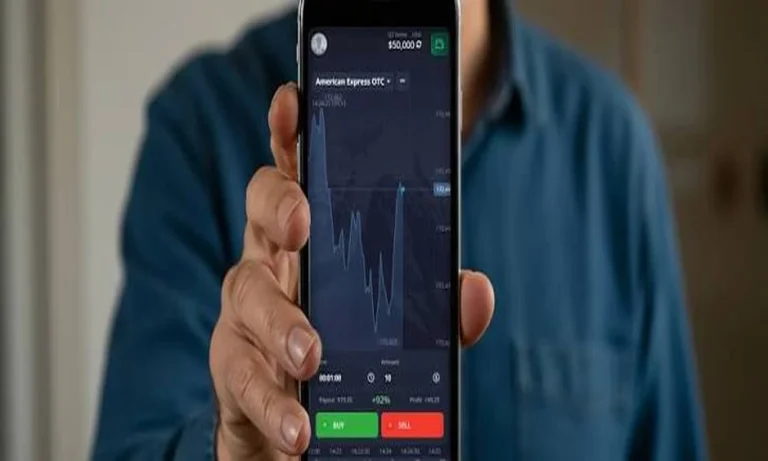
A Day Trading App is designed to help market participants monitor prices, place orders and manage short-term positions within the trading session. Since intraday activity can involve rapid price changes, the quality of execution, market information and risk controls can matter more than visual design alone.

Day trading is fundamentally different from long-term investing. Positions may be opened and closed within the same session, and traders often rely on liquidity, price behaviour and predefined risk levels rather than a long-term business thesis.

Because short-term trading can lead to significant losses, users should evaluate both the platform and their trading process carefully before committing capital.

Start With Fast and Clear Order Placement

Active traders benefit from an order screen that is simple to navigate and quick to use. Before submitting an order, they should be able to review essential details such as the security name, quantity, price, order type, available funds, product type and applicable charges. Although fast execution matters, accuracy should remain a priority. Checking the order details before confirmation can help prevent unintended positions caused by incorrect quantities or prices, especially during volatile market conditions.

Understand the Available Order Types

Market and limit orders serve different purposes. A market order generally aims to execute at the best available market price, while a limit order lets traders specify the price at which they are willing to buy or sell. Market orders may suit situations where immediate execution is important and sufficient liquidity is available. Limit orders offer greater price control, although execution is not guaranteed if the market does not reach the specified price.

Check Market Depth

Market depth displays available buy and sell orders at different price levels. It helps traders assess short-term liquidity and understand the number of orders near the current market price. However, order-book information can change rapidly as participants modify or cancel orders. Therefore, market depth is best used to evaluate execution conditions rather than predict future price movements.

Review Charting Tools

Charting tools help active traders analyse historical prices and trading volumes across different periods. Useful features include multiple timeframes, volume data, moving averages, momentum indicators, drawing tools, and support and resistance levels. Using too many indicators can create conflicting signals and complicate decisions. A smaller set of familiar tools may help traders interpret market conditions more consistently.

Look at Liquidity Before Entering

Liquidity plays an important role in day trading because positions may need to be closed quickly. Securities with active participation and narrower bid-ask spreads generally offer better execution conditions. In contrast, low liquidity and wider spreads can increase trading costs and make it difficult to exit at the expected price. Before entering a position, traders should review trading volume, bid-ask spreads, market depth and recent order activity.

Put Broader Market Movement In Context

Around the middle of the trading process, users may follow the Etf Market to understand how broader indices, sectors or diversified market products are behaving during the session.

This can provide useful context for individual price moves without replacing security-specific analysis.

Broader Direction Does Not Guarantee Individual Movement

A stock can fall even when the overall market rises.

Similarly, a stock can rise during a weak market because of company-specific news or sector developments.

Traders should therefore combine market context with instrument-level analysis.

Define Risk Before Entering

Risk management should be established before a position is opened.

A trader can define:

  • Entry level
  • Maximum acceptable loss
  • Exit condition
  • Position size
  • Expected holding period

Position Size Should Match Volatility

Highly volatile securities can move sharply within a short period.

Using a large position in such an instrument can create substantial losses quickly.

Position sizing should reflect both volatility and the trader’s available capital.

Watch For Slippage

Slippage occurs when an order executes at a different price from the one the trader expected.

This can happen during:

  • High volatility
  • Low liquidity
  • Rapid price movement
  • Large orders

Small Differences Can Matter In Frequent Trading

For a trader placing many orders, repeated slippage can affect overall results.

Execution quality should therefore be reviewed alongside brokerage and other transaction costs.

Compare The Complete Cost Structure

Active trading can generate multiple charges over time.

  • Brokerage
  • Exchange-related charges
  • Taxes
  • Statutory levies
  • Other applicable fees

Low Brokerage Does Not Mean Low Total Cost

Even when brokerage is low, frequent transactions can still generate meaningful expenses.

Traders should evaluate their results after all charges rather than focusing only on gross profits.

Use Alerts With A Clear Purpose

Price alerts can help traders monitor specific conditions without watching every security continuously.

Useful alerts may include:

  • Price levels
  • Volume changes
  • Index movement
  • Corporate announcements

Avoid Excessive Notifications

Too many alerts can encourage unnecessary trading.

Notifications should support a predefined strategy rather than create pressure to act on every market move.

Keep A Trading Journal

A journal can help traders understand whether they are following a repeatable process.

Useful records include:

  • Entry reason
  • Entry price
  • Exit price
  • Position size
  • Market context
  • Result
  • Mistakes

Review The Decision Process

A profitable transaction does not always mean the decision was good.

Likewise, a properly planned trade can still lose because markets are uncertain.

Reviewing multiple trades can help identify recurring strengths and weaknesses.

Control Emotional Reactions

Day trading can create strong emotional pressure because prices and profit-and-loss figures change continuously.

Common mistakes include:

  • Chasing a rapidly moving price
  • Increasing exposure after a loss
  • Refusing to close an invalid setup
  • Trading without a plan

Use Predefined Rules

Risk limits and exit conditions are most useful when decided before the trade.

Changing them emotionally after the market moves against a position can create larger losses.

Separate Trading From Long-Term Investing

Intraday positions and long-term financial planning usually serve different purposes.

A trader may focus on price movement and execution, while a long-term investor may focus on business fundamentals, asset allocation and financial goals.

Do Not Let A Short-Term Position Become A Long-Term Holding

One common mistake is holding an unsuccessful intraday position for longer simply to avoid recognising a loss.

A trading position should be managed according to the original plan.

Keep Long-Term Contributions Separate

Investors may also use a Sip Mutual Fund App for recurring long-term contributions, but systematic investing follows a very different framework from intraday activity.

These decisions should be evaluated separately because their objectives, risk profiles and time horizons differ.

Conclusion

A Day Trading App should support fast execution, clear order placement, reliable market data and effective position monitoring.

Traders should also evaluate liquidity, charting tools, charges, security and risk controls before selecting a platform.

The application itself cannot make day trading low-risk. Short-term market activity requires disciplined position sizing, predefined exits and consistent risk management.

A well-designed platform can make execution easier, but the quality of the trading process remains the most important factor.

FAQs1. What Is A Day Trading Platform Used For?

It allows traders to monitor markets, place short-term orders and manage positions during the trading session.

2. Why Is Liquidity Important For Intraday Trading?

High liquidity can support more efficient entry and exit and may reduce bid-ask spreads.

3. What Is Slippage?

Slippage is the difference between the expected execution price and the actual price received.

4. Are Technical Indicators Guaranteed Trading Signals?

No, they analyse historical market data and cannot guarantee future price direction.

5. Why Should Day Traders Define Position Size?

Position sizing helps limit the amount of capital exposed to any single trade.

6. Can Day Trading Produce Large Losses?

Yes, rapid price movement, leverage and frequent activity can result in significant losses.