
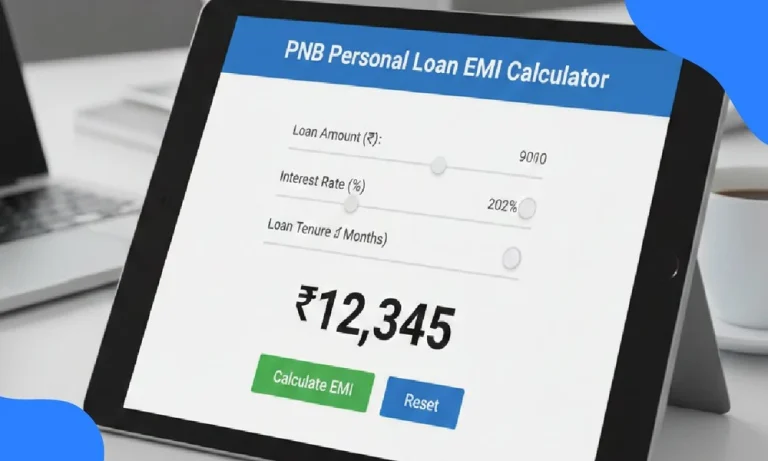
A personal loan calculator can help borrowers understand the financial shape of a loan before they apply. Instead of looking only at the amount they want to borrow, users can estimate the monthly EMI, compare different tenures, and see how repayment may change when the loan amount or interest rate changes.
This makes the borrowing decision more concrete.
A loan can feel affordable when viewed only as a lump sum, but the monthly repayment may tell a different story. Using a calculator early can help borrowers test several possibilities before committing to one.
Start With A Funding Scenario
Before using a loan calculator, determine how much you actually need to borrow. Begin with the full expense, then account for savings that can be used without reducing your emergency reserve.
For example, if an expense is ₹4 lakh and ₹1 lakh can be comfortably funded from savings, the borrowing requirement may be closer to ₹3 lakh.
A lower loan amount can reduce both the monthly EMI and the total interest payable.
See How The Interest Rate Changes The Result
The interest rate is one of the main inputs in a loan calculator. Enter a rate that reflects a genuine offer or a reasonable range based on the information available.
Avoid using an unusually low rate simply because it produces a smaller EMI.
Instead, test more than one rate to understand how changes in borrowing costs affect repayment. This gives you a more realistic range rather than relying on a single assumption.
Explore Different Tenure Scenarios
Loan tenure affects both the EMI and the total cost of borrowing. A longer tenure generally reduces the monthly repayment by spreading it over a greater number of months, but it can increase the total interest paid.
A shorter tenure usually has the opposite effect, with a higher EMI but a shorter repayment period.
To understand this trade-off, calculate at least three options:
- A shorter tenure
- A mid-range tenure
- A longer tenure
Compare the EMI, total interest and overall repayment for each option. This helps show why the smallest monthly payment may not result in the lowest overall borrowing cost.
Check Whether The EMI Fits The Household Budget
An estimated EMI becomes more useful when it is considered alongside regular household commitments.
Review expenses such as rent, groceries, utility bills, existing EMIs, insurance, education costs and planned savings. After accounting for these obligations, there should still be sufficient room for unexpected expenses.
The purpose of the calculator is not simply to identify an EMI that can technically be paid. It should help determine whether that repayment can fit comfortably within the wider monthly budget.
Try Borrowing Less
After calculating the initial scenario, reduce the loan amount and run the calculation again.
This can show the financial effect of paying part of the expense from savings, reducing the purchase amount or postponing a portion of the spending.
- A lower EMI
- Lower total interest
- Greater flexibility to choose a shorter tenure
Seeing these changes numerically can make the cost of taking on additional debt easier to understand.
Ask What Happens If You Repay Faster
If the original EMI appears manageable, test a shorter tenure. This helps determine whether the loan could be repaid faster without putting excessive pressure on the monthly budget.
A shorter repayment period can reduce the overall interest burden, but the higher EMI should still leave enough room for emergencies and other financial commitments.
The objective is to find a repayment period that balances faster debt reduction with sustainable monthly cash flow.
Run A Higher-Rate Stress Test
Finally, test the loan using a slightly higher interest rate than the initial assumption.
This is not a prediction of the rate that will ultimately be offered. Instead, it shows how the EMI and total repayment could change if the borrowing cost is higher than expected.
If the budget remains manageable under the higher-rate scenario, the borrower has a clearer view of the financial margin available for repayment.
Use The Calculator To Compare, Not Just Calculate
A loan calculator is most useful when it is used to test different borrowing scenarios rather than produce a single EMI figure.
Changing the loan amount, interest rate and tenure can reveal how each decision affects monthly repayment and total borrowing cost. This allows borrowers to assess the loan against their actual financial capacity before making a commitment.
Use The Estimate Before Starting A Digital Application
Borrowers considering an instant loan app can use calculator estimates beforehand to define the maximum loan amount and EMI they are comfortable accepting.
This creates a financial boundary before the application begins.
Instead of adjusting the budget to match an offer, the borrower can compare the offer against a repayment limit already decided in advance.
Know What The Calculator Can And Cannot Tell You
A personal loan calculator is a planning tool, not a confirmation of the final loan terms. Its estimate is based on the information entered, while the actual repayment may depend on the approved interest rate, processing fee, tenure and lender-specific conditions.
For this reason, treat the calculated EMI and total repayment as estimates until the lender provides the final terms. The loan agreement and repayment schedule remain the important documents for confirming the actual obligation.
Look Beyond The Calculated EMI
The EMI does not always represent the complete cost of obtaining a personal loan. Processing fees and other applicable charges should also be considered separately.
Before accepting an offer, check how the following figures relate to each other:
- Amount sanctioned
- Amount actually received
- Processing fees or other deductions
- Total amount repayable
For example, a borrower may be sanctioned a particular amount but receive less after applicable fees are deducted. Looking at the complete transaction provides a clearer picture of the actual cost.
Place The New EMI Alongside Existing Debt
A personal loan should not be evaluated separately from other monthly obligations. Existing commitments may include a home loan, vehicle loan, education loan, credit card balance or another personal loan.
Add the estimated new EMI to the current monthly debt payments. The combined amount gives a better indication of how much of the monthly budget would be committed to debt repayment.
Work Backward From An Affordable EMI
Instead of starting with the maximum loan amount available, borrowers can start with the monthly repayment they can reasonably accommodate.
Use different combinations of loan amount, interest rate and tenure to determine what borrowing structure fits that limit.
This approach shifts the focus from how much can be borrowed to how much can be repaid comfortably.
Test The Loan Under Less Comfortable Conditions
An EMI that fits the current budget may become difficult if expenses increase or income temporarily changes.
Run a simple buffer test by assuming that monthly expenses rise slightly. Consider situations such as unexpected medical costs, higher utility bills, temporary income fluctuations or additional family expenses.
If the repayment remains manageable after allowing for these possibilities, the borrowing plan has more room to absorb financial changes.
Consider Future Prepayment Carefully
Some borrowers may expect a bonus, incentive, business payment or another lump-sum income that could potentially be used for prepayment.
A calculator may not account for every prepayment condition, so do not assume that future income will automatically reduce the loan cost. First check the lender’s applicable prepayment rules, charges and conditions.
If prepayment is permitted on suitable terms, estimate how an earlier reduction in the outstanding balance could affect the effective repayment period.
Compare More Than One Borrowing Structure
Before deciding, save several realistic scenarios rather than relying on one calculation.
For instance, you could compare:
- Lower principal with a shorter tenure
- The same principal with a moderate tenure
- Higher principal with a longer tenure
Review both the monthly EMI and total repayment for each scenario. This makes it easier to see the difference between immediate affordability and the longer-term cost of borrowing.
Recalculate When The Offer Changes
The original calculator result should not be treated as final if the lender provides different terms.
Recalculate whenever there is a change in the:
- Interest rate
- Loan amount
- Tenure
Even one changed input can affect the EMI and overall repayment. Using outdated figures could give a misleading impression of affordability.
Make One Final Check Before Acceptance
Once the actual loan terms are available, enter the final principal, interest rate and tenure into the calculator again.
Then compare the result with the repayment schedule supplied by the lender. If the figures do not appear consistent, ask the lender to explain the difference before accepting the loan.
This final comparison helps ensure that the decision is based on the actual offer, rather than an earlier estimate.
Conclusion
A personal loan calculator can turn an abstract borrowing decision into a more practical repayment plan.
By testing different loan amounts, interest rates, and tenures, borrowers can estimate EMI, compare total interest, and identify a repayment structure that fits within the monthly budget.
The calculator is most useful when it is used before application, during offer comparison, and again before final acceptance. It does not replace the loan agreement, but it can help borrowers enter the process with clearer financial limits and better repayment awareness.
FAQs
1. What Does A Personal Loan Calculator Show
It typically estimates the monthly EMI based on the loan amount, interest rate, and repayment tenure entered by the user.
2. Can A Personal Loan Calculator Show The Exact Final EMI
It provides an estimate. The actual EMI may depend on the final approved rate, tenure, loan amount, fees, and lender terms.
3. How Can I Use A Personal Loan Calculator To Choose A Tenure
Compare shorter and longer tenures to see how they affect both monthly EMI and total interest cost before deciding which option fits your budget.
4. Should I Calculate EMI Before Applying For A Personal Loan
Yes. Estimating EMI beforehand can help you define a comfortable borrowing amount and avoid accepting a repayment schedule that stretches your budget.
5. Why Should I Recalculate After Receiving A Loan Offer
The final approved terms may differ from your initial assumptions. Recalculating with the actual rate, amount, and tenure provides a more accurate view of repayment.