
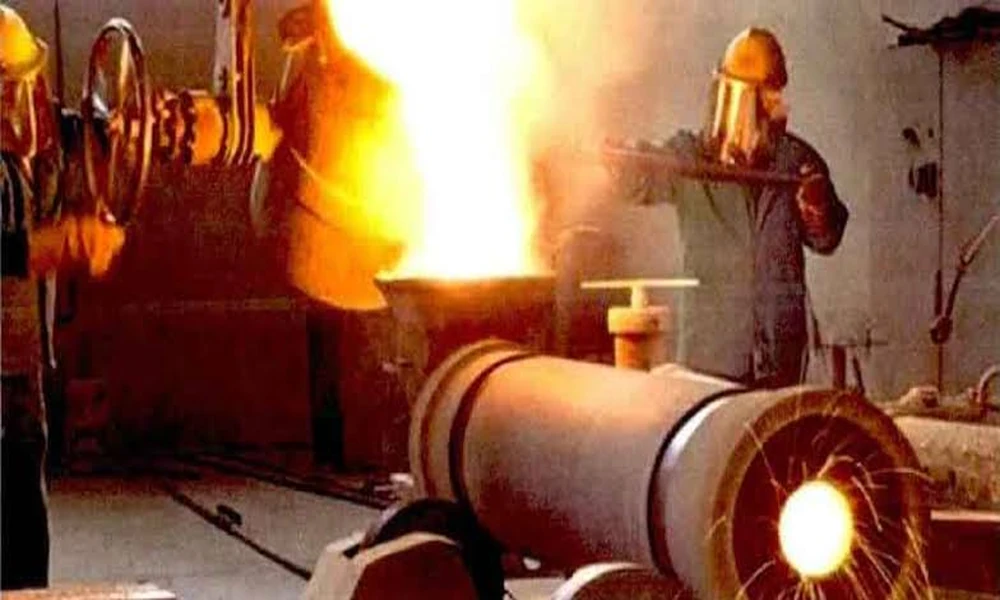
Centrifugal casting is one of the oldest and most reliable methods for producing cylindrical or tubular metal components with superior metallurgical properties that static casting cannot match. By introducing molten metal into a rotating mold, the centrifugal casting process uses centrifugal force to distribute the metal against the mold wall and to segregate non-metallic inclusions, slag, and lower-density impurities toward the inner bore, where they are removed by machining. The result is a casting with a dense, homogeneous outer wall whose structural properties are significantly better than a statically cast cylinder of equivalent dimensions. Understanding what centrifugal casting manufacturers produce, the process variants, and the applications where centrifugal casting services are the preferred manufacturing approach helps engineers and procurement teams identify the right process for cylindrical component requirements.
How does the centrifugal casting process work?
The centrifugal casting process involves pouring molten metal into a mold rotating about its own axis at a controlled speed. The centrifugal force generated by the rotation presses the molten metal against the inner surface of the mold wall, where it solidifies progressively from the outer diameter inward. The rotation speed is selected to generate a G-force, typically 60 to 80 times the gravitational force, that is sufficient to maintain the metal distribution against the mold wall while the metal solidifies.
The key metallurgical advantages of the centrifugal casting process:
- Grain refinement: the rapid solidification of metal at the mold interface produces a fine, dense grain structure at the outer wall that is significantly finer than the coarser grain of a static casting
- Elimination of porosity: the centrifugal force compresses the solidifying metal against the mold wall, reducing the shrinkage porosity and gas porosity that form in the lower-pressure environment of a static mold
- Segregation of inclusions: non-metallic inclusions, slag particles, and lower-density impurities are displaced toward the inner bore by centrifugal force, concentrating the contaminants in the material that is removed by machining during bore finishing
- Near-net-shape cylinders: the process produces cylinders, tubes, and rings close to the final dimensions, reducing the machining allowance required to reach the finished bore and outer diameter dimensions
What is horizontal centrifugal casting?
Horizontal centrifugal casting is the process variant in which the mold rotates about a horizontal axis. This configuration is used for the production of long cylinders, tubes, and pipes whose length-to-diameter ratio exceeds the practical limits of vertical centrifugal casting. Horizontal centrifugal casting is the standard process for:
- Centrifugal casting pipes: large-diameter, long-length metal pipes in iron, steel, and non-ferrous alloys for water supply, sewage, industrial process piping, and oil and gas transmission
- Cylinder liners and sleeves: engine cylinder liners, hydraulic cylinder barrels, and the sleeve components of compressors and pumps that require the fine grain structure and freedom from porosity of the centrifugal process
- Rolls and rollers: the heavy rolls of rolling mills for steel, aluminium, and paper production, whose combination of large diameter, significant length, and the wear resistance required for repeated contact with the rolled product makes centrifugal casting the preferred manufacturing process
- Bushings and bearing sleeves: bimetallic centrifugal castings in which a steel or cast iron outer shell is lined with a bearing alloy (bronze, white metal, or aluminum bearing alloy) applied by centrifugal casting to produce a wear-resistant bore surface bonded metallurgically to the structural outer shell
What materials are processed by centrifugal casting foundries?
A centrifugal casting foundry processes a wider range of materials than most other casting processes because the centrifugal mold can be applied to any alloy that can be melted and poured:
- Cast iron: gray iron, ductile iron, and high-alloy white irons for wear-resistant applications including pump impellers, mill rolls, and crusher liners
- Steel: carbon steel, low-alloy steel, and stainless steel for pressure-containing cylinders, chemical process pipes, and structural tubes
- Non-ferrous alloys: copper alloys (bronze, brass), aluminum alloys, and nickel-base superalloys for bearings, marine components, aircraft structural rings, and high-temperature process equipment
- Bimetallic castings: the centrifugal process uniquely allows the sequential casting of two different alloys in the same mold, producing a component with a structural outer shell and a wear-resistant or corrosion-resistant inner bore bonded metallurgically across the interface
How should engineers qualify a centrifugal casting manufacturer?
The qualification of a centrifugal casting manufacturer or centrifugal casting company for a critical application involves evaluation of the manufacturer’s process control documentation, the alloy chemistry and mechanical property testing protocols, the non-destructive testing capability and the applicable inspection standards, and the track record of producing components to the relevant industry standards for the application. For pressure-containing and structural applications, the applicable ASME, ASTM, or industry-specific casting standards define the acceptance criteria that the casting manufacturer must meet and document.
Selecting a centrifugal casting supplier requires close attention to material capabilities, dimensional limits, process controls, testing procedures, and compliance with relevant industry standards. Engineers should also consider the manufacturer’s experience with the intended application, machining requirements, and required production volume. A thorough technical evaluation helps ensure that the finished cylinders, tubes, rings, or bimetallic components deliver the necessary strength, consistency, and service life.

Comments are closed.